
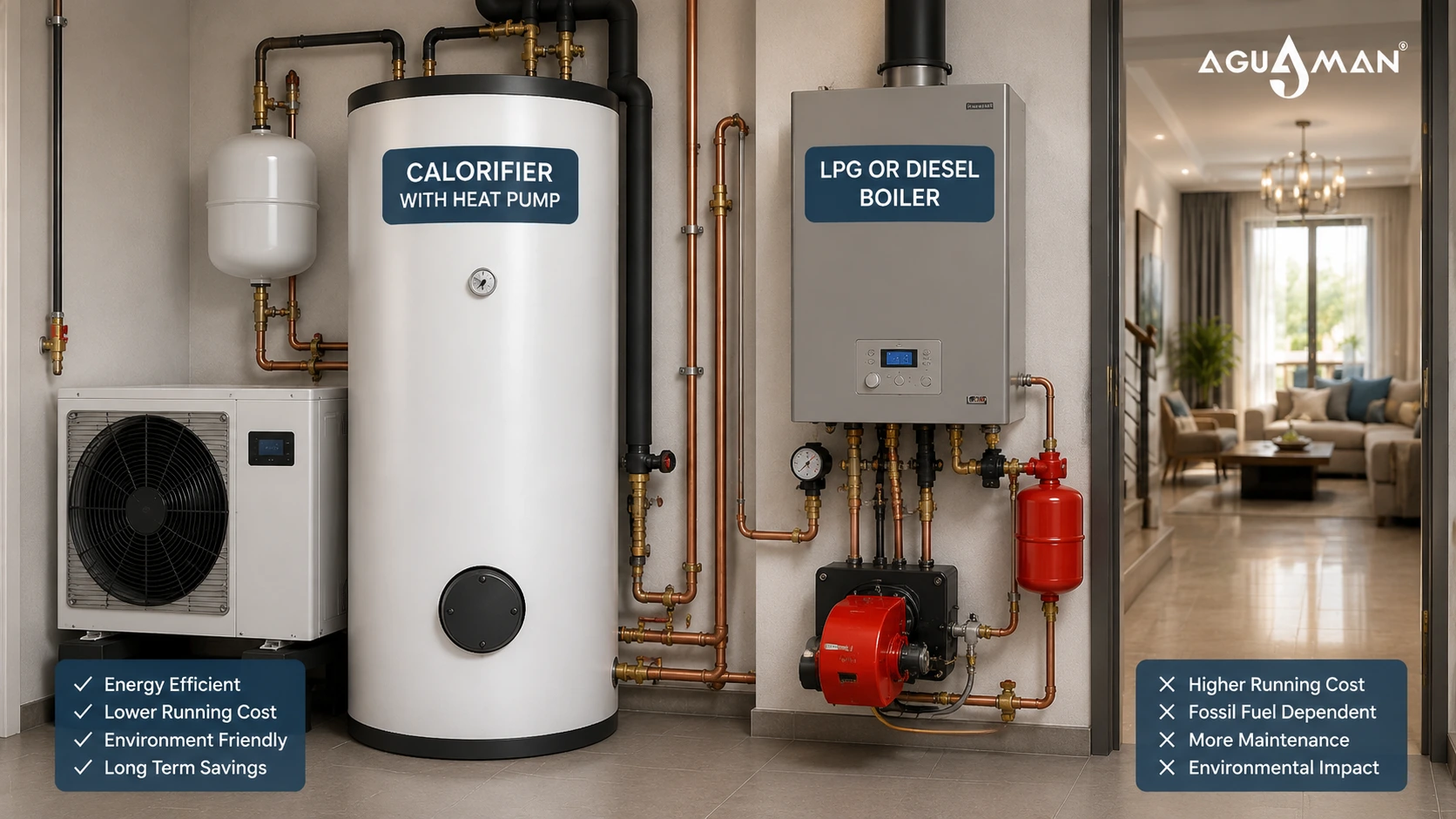
While selecting a hot water system for your building in Dubai, one question that often comes up is if the calorifier with heat pump is preferable to LPG or diesel boiler. The answer will depend on the hot water requirement and energy needs, the space available, and the long-term goals of operation. The comparison of the efficiency of maintenance, installations, as well as running costs will help you make an informed choice.
What Is a Calorifier with Heat Pump?
Calorifier is basically an insulated hot water storage heater. In connection with a heat pump, it takes the heat from the air around it instead of through combustion, and stores it in the form of heated water for use at a later time.
The combination is commonly referred to as the air source heat pump calorifier. It can give out a consistent supply of hot water, but without any flame or fuel line inside your building.
What Is a LPG or diesel Boiler?
An LPG or diesel boiler is a heating system that generates heat using liquefied petroleum gas (LPG) or diesel oil. Heat produced by this unit is transferred to the water, hence hot water is generated.
This type of boiler is widely used in hotels, villas, restaurants, and commercial buildings, in which a steady hot water source is required. They also require the storage of fuel, combustion as well as ventilation and regular maintenance.
Heat Pump vs LPG and Diesel Boiler: Key Differences
The major differences are related to the source of energy, operations, maintenance, and environmental aspects.
- Heating without direct fuel burning.
- Can support energy-efficient hot water production.
- May provide storage of hot water in case of increased demand.
- Integrates into sustainable construction systems.
- It requires electricity to run the heat pump.
- Makes use of combustion fuel to create heat.
- Needs constant fuel supply.
- Has to have appropriate exhaust and ventilation.
- Needs maintenance for combustion.
- Running expenses can change according to the consumption of fuel or market rates.
Neither option is automatically suitable for every property. A professional assessment should consider the complete system rather than one specification.
Why Choose a Calorifier Over a Boiler?
In many homes in Dubai calorifiers can be an environmentally sustainable and practical option than a diesel or LPG boiler. In combination with an appropriate heater, it is capable of storing hot water, and it employs a highly efficient method of heating from an external source rather than combustion directly. This minimizes the need for fossil fuels, increases efficiency in the utilization of energy, and also provides stable hot water to hotels, villas, and commercial buildings.
Why Dubai Properties Are Shifting Away from LPG Boilers
Due to the climate in Dubai and regulations on constructions make fuel-based boilers increasingly ineffective. LPG boiler setups require gas cylinders or bulk tanks, regular refills, and strict safety compliance checks.
Diesel boilers come with similar issues with storage of fuel and odours, as well as soot buildup and regular servicing that can add to the over time. For villas, labour camps, and commercial buildings, these demands can become a significant operational burden.
Calorifier with Heat Pump: Key Advantages
Here’s the reason more property owners and facilities managers across Dubai are making the switch:
- Lower running cost — electric-powered heat transfer requires much less power compared to burning fuel
- No fuel storage risk — eliminates LPG cylinder or diesel tank hazards
- Minimal maintenance — fewer moving parts prone to fouling or corrosion
- Longer lifespan — well-maintained units typically outlast conventional boilers
- Quieter operation — no combustion noise or exhaust venting required
Price and Cost Comparison
Upfront cost of installing the heat pump calorifier is generally more than an LPG boiler. But when it comes to the operational cost, a very different story emerges.
Fuel-powered boilers will need frequent monthly expenses for the purchase of fuel such as diesel and gas. For a calorifier with a heat pump, electricity will be used, but this will cost way less than the amount of fuel consumed.
Why Choose Aguaman for Heat Pump Calorifiers?
Aguaman is a leading calorifier tank supplier with years of experience and has installed and serviced hot water systems across Dubai’s villas, hotels, and labour accommodation projects for years. Our hands-on knowledge means that our recommendations are based upon real performance data and not on guesswork.
Our engineers evaluate the hot water consumption, water quality, and available space in order to suggest the appropriate system; we do not sell a standard solution for everybody. In addition, we give clear information about the service schedule.
Each installation adheres to specifications from the manufacturer as well as UAE safety standards. Additionally, we’re honest about trade-offs instead of promoting a particular product.
Final Thoughts
For most Dubai properties, a calorifier with heat pump offers a safer, cleaner, and more cost-effective path to reliable hot water compared to LPG or diesel boilers. The switch pays off through lower bills, less maintenance, and reduced fuel-handling risk.
FAQs
What is the difference between a calorifier and a boiler?
A calorifier stores hot water and receives heat from an external source, while a boiler generates heat to produce hot water or support other heating applications.
Can a heat pump replace a diesel boiler?
In suitable hot water applications, a heat pump and calorifier can replace a diesel boiler. A professional assessment is recommended to confirm capacity and infrastructure requirements.
Does a heat pump require electricity?
Yes. Heat pumps could be helpful in hotels provided they are sized according to occupancy, hot water needs, peak demands, and storage facilities.
Is a heat pump suitable for hotels in Dubai?
Yes. Heat pumps utilize electricity in operating its compressor and other mechanisms in creating heat from air to water.