
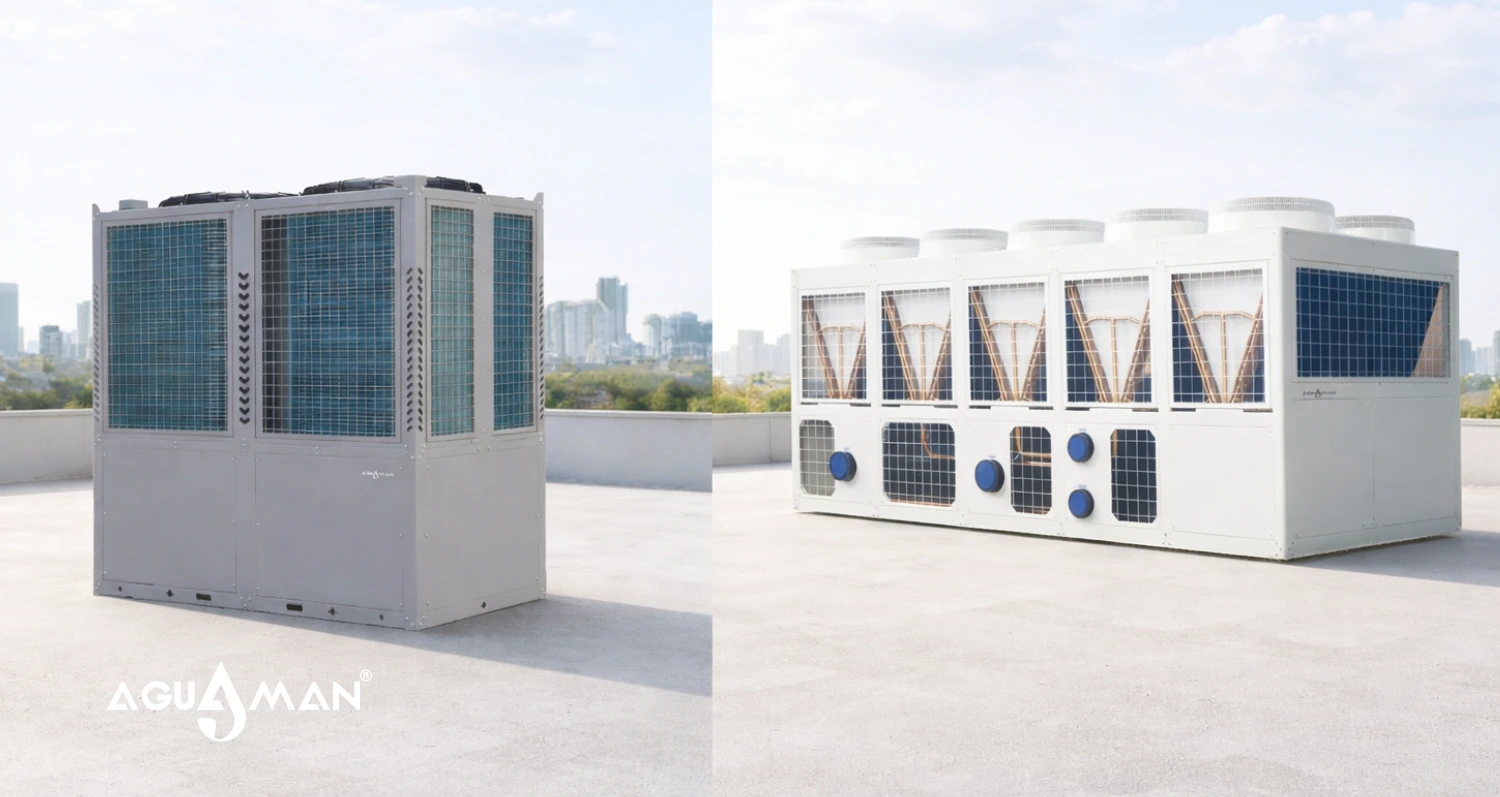
A water chiller system and a beat pump may feel similar fromthe outside, but they serve different purposes. Simply put, a water tank chiller system is designed to reduce heat and cool the water, while a heat pump transfers heat for both heating and cooling. Understanding the major differences can help businesses and facility managers choose the right solution for comfort, process cooling, and energy efficiency.
Jump right into this article to find out how each system functions in the context of where they are utilized and the best way to choose which one is best for your needs.
What is a water chiller system, and what does it do?
A water chiller system is a mechanical cooling solution that removes heat from water and circulates the chilled water to cool spaces, equipment, or industrial processes.It is extensively employed in factories, commercial buildings as well as data-driven areas where temperature control is crucial.
Key purposes of a water chiller system :
- Maintain consistent indoor temperatures
- Support process cooling in manufacturing
- Protect equipment from overheating
- Enable large-scale cooling with high efficiency
In water chiller system industrial applications, chillers are essential for plastics, food processing, pharmaceuticals, and chemical plants.
How does a water chiller system work?
A water chiller or water cooling system works by absorbing heat from water and releasing it outside through a refrigeration cycle.
The basic working procedure:
- Warm water enters the chiller
- The refrigerant sucks up the heat.
- Heat is expelled via air or water condensers
- The chilled water is recirculated to the system
This process supports both water cooling system applications and centralised HVAC setups.
What is a heat pump, and how is it different?
A heat pump is a system that moves heat rather than generating it. It is able to cool in summer and warm in winter, reversing its operating cycle.
Key characteristics of heat pumps
- Works for both heating and cooling
- Transfers heat rather than taking it away permanently
- Often used in residential and light commercial buildings
- Popular in areas such as in the United Arab Emirates, where mild winters help to ensure the operation of the country.
The growing demand for heat pump UAE solutions is driven by energy-efficiency regulations and sustainability goals.
What is the difference between a water chiller system and a heat pump?
The main difference between these systems lies in their function and application.
Core differences at a glance
Purpose
- Water chiller: Cooling only
- Heat pump: Heating and cooling
Application scale
- Chillers: Large buildings and industrial facilities
- Heat pumps: Homes and smaller commercial spaces
Performance focus
- Chillers: High cooling loads and precision control
- Heat pumps: Energy-efficient temperature transfer
A water chiller system setup is ideal where continuous cooling is non-negotiable.
How does pricing compare?
The water chiller price depends on:
- Cooling capacity
- Type of chiller
- Installation complexity
- Maintenance requirements
Although initial costs might be more expensive than heat pumps, the long-term performance and reliability often justifies the expense of large structures. If you are considering purchasing an air chiller or heat pump take into account the cost and use specifications to make the right choice.
Conclusion
A water chiller system is the ideal choice if you require massive, reliable cooling with precise control. Heating pumps are best suited for smaller homes that require both cooling and heating. The final choice depends on the climate, building dimensions, and the operational requirements.
FAQs
How does a water chiller system work?
It removes heat from water using a refrigeration cycle and redistributes chilled water for cooling purposes.
What are the three types of chillers?
Air-cooled, water-cooled, and absorption chillers are the three main chiller types.
What is a chilled water system in UAE?
It is a centralised cooling system widely used in large buildings to manage extreme outdoor temperatures efficiently.
Are heat pumps covered by insurance?
In most cases, yes, as part of HVAC coverage, but policy terms may vary.
What is the primary function of a chiller in a chilled water system?
To remove heat from water and maintain consistent cooling across connected spaces.