
Industrial chillers are very useful in keeping temperatures controlled in commercial and industrial buildings. A chiller system in building applications needs to function reliably due to the fact that even minor cooling issues could affect equipment performance, and operational costs. The climate in Dubai is warm and thus an old chiller may face challenges in its maintenance.
Why a Chiller System in Building Operations Fails Over Time
In Dubai, the heat is so intense that the air conditioning will be tested to its maximum throughout the year, and no matter how well-maintained an air conditioner is, there will come a time when the water chiller finally runs out of service life.
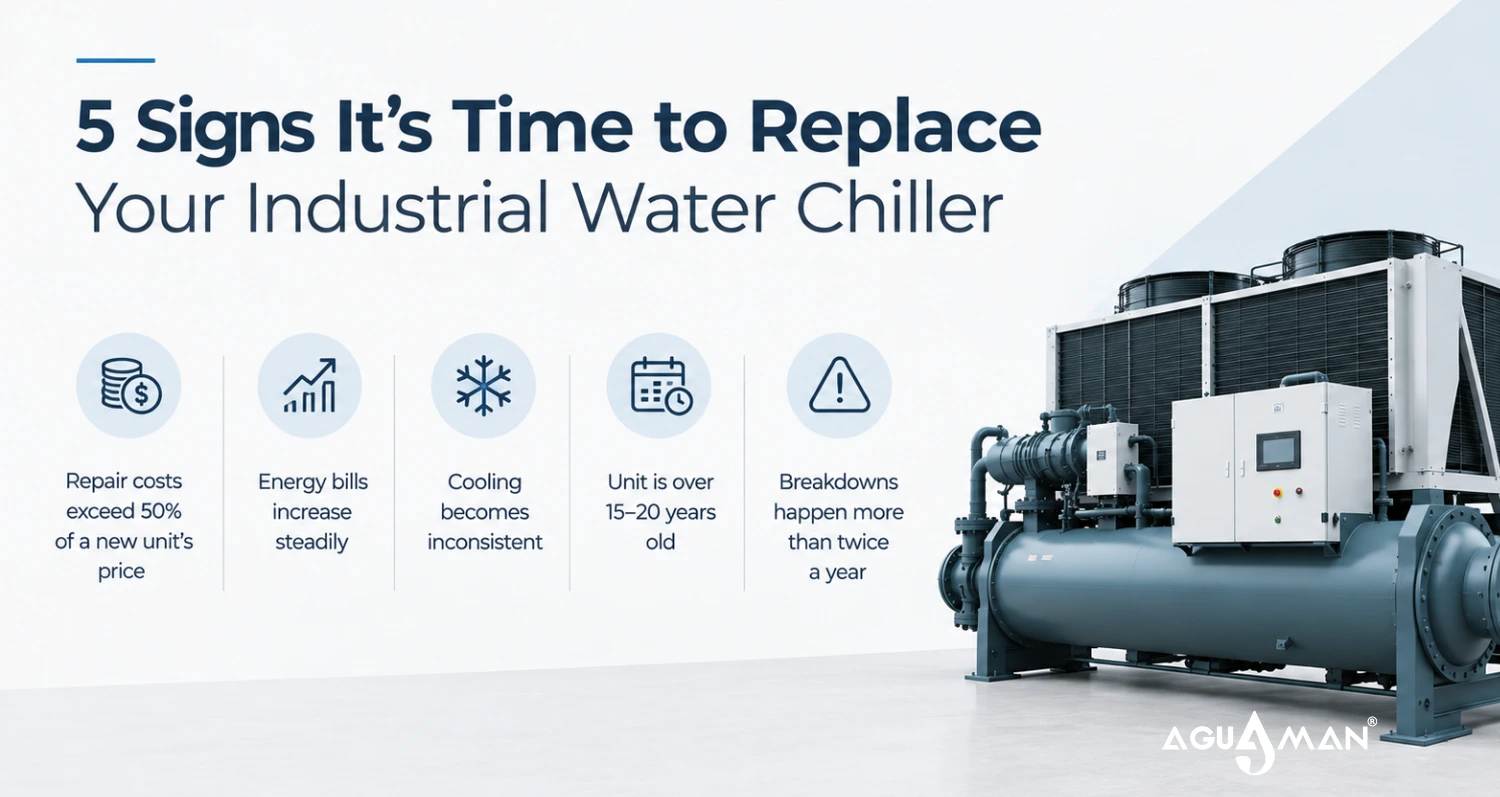
Let’s look at each sign in more detail.
Common Signs Your Commercial Chiller System Needs Replacing
1. Rising Energy Bills Without Increased Usage
The older the HVAC unit is, the less effective it becomes. If you notice that electricity bills continue to rise despite the fact that operational time remains the same, then the compressor and heat exchange devices work more intensively than they should.
2. Frequent Breakdowns and Repairs
Every mechanical system has a repair threshold. Once you’re calling technicians every few months, the math stops making sense. Consequently, replacement often becomes the more economical path forward.
3. Inconsistent Cooling Performance
An inefficient chiller water system usually indicates poor temperature distribution throughout the building. This means that certain floors or zones get warmer than they should since the unit cannot cool as efficiently as it should.
4. Outdated Design and Controls
Science and technology have made tremendous progress. The components of your HVAC unit, such as compressors, condensers, and control panels, may be outdated and therefore not as efficient as they could be today. Comparing the diagram of your unit with more advanced HVAC units will illustrate the point.
5. Age Beyond 15–20 Years
Most industrial chillers are designed to last 15 to 20 years with proper maintenance. Beyond that point, even a well-serviced unit becomes a liability rather than an asset.
Why This Matters for Dubai Buildings?
Dubai’s climate places extra strain on cooling equipment. Buildings that rely on aging infrastructure often see faster wear, especially during summer peak loads. Therefore, proactive assessment matters more here than in milder climates.
- Higher ambient temperatures increase compressor workload
- Continuous year-round operation shortens component lifespan
- Dust and humidity accelerate wear on outdoor units
Why Choose Aguaman?
Aguaman offers expertise in maintenance of commercial chiller system installations in Dubai’s tough weather conditions. Their technical experts examine the real working data and not just visual observation before advising you for repairing or replacing your chiller.
This method of problem detection will help property owners avoid unnecessary replacement of chillers and help detect true problems in the early stage. At Aguaman, their technical experts will offer you honest costs to choose what is better for you without any pressure.
Conclusion
Recognizing the signs early can help in avoiding expensive emergency breakdowns. Irrespective of the high cost of energy, high repair expenses, or outdated design, it is cheaper to replace an inefficient chiller in building setup than to continue its maintenance.
FAQs
The industrial chiller generally lasts for about 15-20 years when maintained well, but usage and climate have a huge influence on that.
When the cost of repair exceeds half of the cost of a new unit, it becomes more sensible to replace.
Rising energy costs as well as inconsistent cooling, odd sounds, and more frequent repairs are usually the first signs of trouble.
High ambient temperature and continuous work may reduce its lifespan due to higher wear compared to cooler climates.