
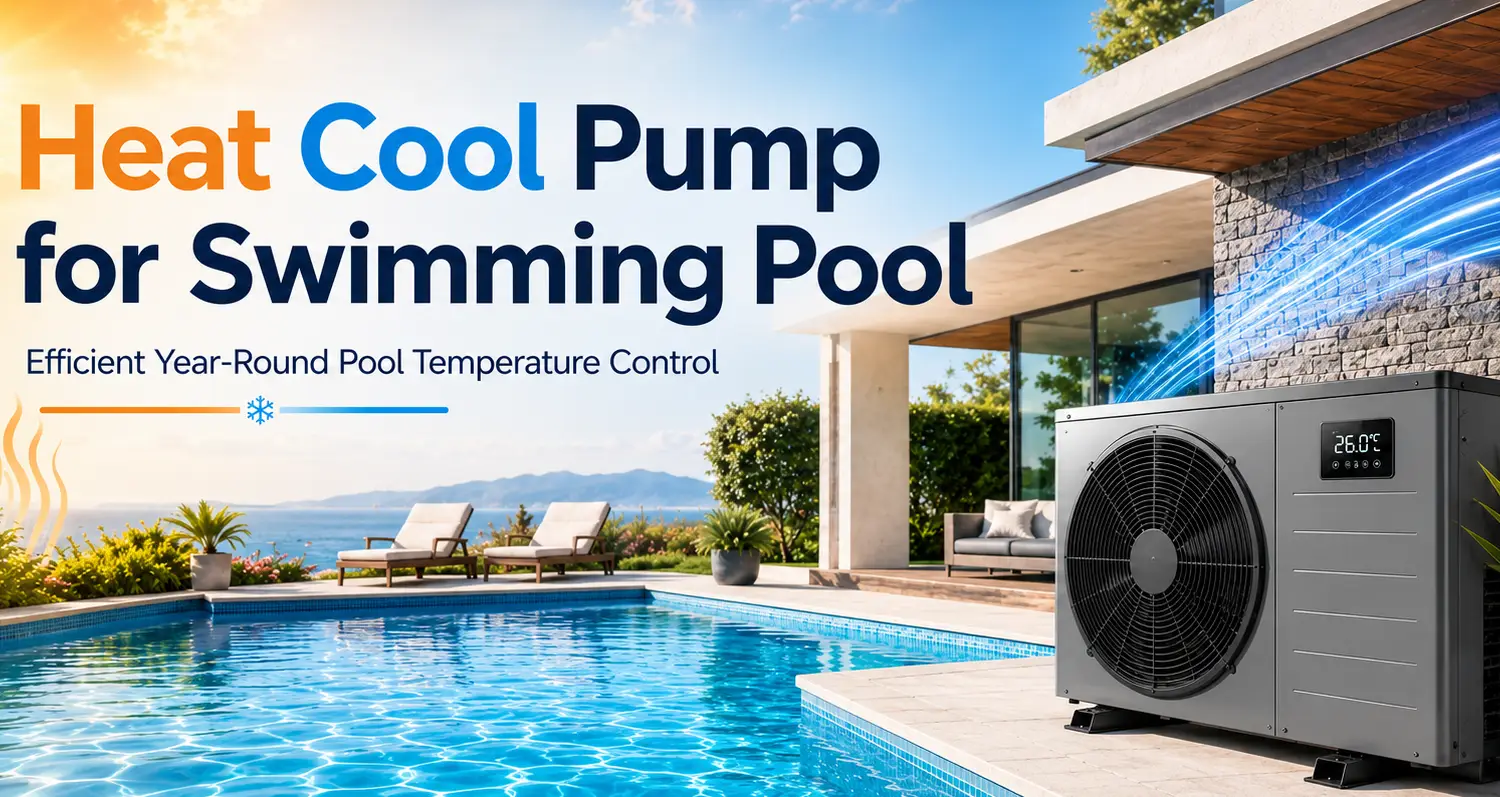
A heat cool pump for swimming pool is a great way to keep your pool water temperature just right all year long. You can heat up your pool in the winter and cool down your pool when it gets too warm in the summer.
A pool cooler won’t just heat your pool like a pool heater. It allows you to better maintain a comfortable temperature when the weather is fluctuating. Heat cool pumps are ideal for use in private villas and hotels & resorts and spas or gyms and schools as well as commercial pool applications.
Let’s look at how the system works. What are the advantages of using this type of system and what factors influence its performance.
What Is a Heat Cool Pump for Swimming Pool Use?
A heat cool pump is temperature-control system that heats and cools swimming pool water. Rather than generating copious amounts of heat, a heat cool pump transfers heat. When heating a pool, the pump pulls heat from the air and adds it to the water. When cooling the water, it extracts heat from the water and dumps it into the air.
This system allows pool owners to better regulate temperature without needing two separate systems. You may have searched here using the keywords heat cool pump for swimming pool, but this device can also be known as:
- Swimming pool heating and cooling heat pump
- Reversible pool heat pump
- Pool heater and chiller
- Pool temperature-control heat pump
- All-season swimming pool heat pump
How Does a Swimming Pool Heating and Cooling Pump Work?
A swimming pool heat pump operates on a refrigeration cycle, just like an air- conditioning system would..
Swimming pool water flows through the heat pump’s heat exchanger, and either has heat added to it or has heat removed from it, depending on the operating mode selected.
Here is the main cycle/process:
- Pool water enters the heat pump.
- The system measures the current water temperature.
- Heating or cooling mode activates according to the selected setting.
- Heat is transferred through the heat exchanger.
- Temperature-controlled water returns to the swimming pool.
Since it moves existing heat rather than generating 100% of the heat directly, the system can offer effective long-term heating or cooling. Pool heat pumps work well in warm climates and transitional seasons where the air temperatures are still mild.
What Are the Benefits of a Heat Cool Pump for Swimming Pool Owners?
Comfortable Water Temperature
Going swimming in very cold or overly hot water can be unpleasant. A reversible pool heat pump allows you to keep the pool at your chosen temperature so you and your family, guests, athletes or customers can enjoy swimming.
Heating and Cooling in One System
The primary benefit of a reversible heat pump is that you can use it for both cooling and heating. Instead of needing two separate machines for seasonal temperatures, you can buy, install and maintain just one unit.
Energy-Efficient Operation
Heat pumps transfer heat between the air and water instead of generating the heat from scratch. This means they use less energy than many traditional electric heaters. Your energy savings will vary based on equipment type, outside temperature, pool volume, insulation values and usage.
Extended Swimming Season
With the ability to control temperature throughout the year, your heat cool pump can allow you to open your pool earlier and close it later. Homeowners can enjoy swimming for more of the year. Hotels, resorts, gyms and clubs can offer swimming facilities to customers for extended periods.
Stable Temperature Control
New systems feature thermostat controls which continually measure the pool temperature. Once the desired temperature is reached, the thermostat will alter the pumps operation to maintain that temperature. This avoids sudden and unpleasant changes in temperature.
Suitable for Residential and Commercial Pools
Heat cool pumps are available in many sizes and capacities. There are smaller models for domestic pools. Larger models or multiple pumps can heat and cool pools for hotels, schools, gyms, spas, resorts and public pools.
When Is Pool Cooling Necessary?
Everyone knows how to heat a pool but sometimes in countries where summers can get extremely hot, cooling a pool can be just as necessary.
Strong sunshine, high ambient temperatures, little shade on pools, dark pool finishes and even warm overnight temperatures can all contribute to swimming pool water temperatures getting too high. Adding cold water may offer temporary relief but will increase water usage.
A reversible pool heat pump gives you far more control. It will extract heat down to your chosen temperature level.
Applications for pool cooling include:
- Outdoor pools exposed to strong sunlight
- Hotel and resort swimming pools
- Hydrotherapy and wellness pools
- Sports and training facilities
- Indoor pools with limited ventilation
- Pools located in consistently hot climates
How Do You Choose the Right Heat Cool Pump?
While it may be tempting to purchase a pool heat pump based solely on price, this can lead to disappointing performance or excessive energy use. An undersized or oversized system can be a burden. Proper calculation of the pool’s requirements can help determine the right size and model.
Pool Size and Water Volume
Larger pools have more water that needs heating or cooling. Be sure to know the pool’s length, width, depth, shape and total volume of water.
Desired Water Temperature
Heating and cooling needs are also affected by the difference between the current water temperature and the desired temperature. The larger this variance, the more powerful the system may need to be.
Climate and Outdoor Conditions
Outside temperatures, humidity levels, wind, sun and seasonal temperatures can impact heat-pump efficiency. Professional sizing can determine if a single unit or multiple-unit configuration is needed for your pool.
Indoor or Outdoor Installation
Outdoor pools lose more heat (or gain more heat from the sun) due to evaporation. Indoor pools may require considerations for airflow, ambient humidity, ventilation and available space for equipment.
Pool Usage
How often the pool will be used should be considered. A small private pool that sees weekend use may not need the same level of capacity and dependability as a hotel pool used daily by guests. Commercial pool operators typically require reliable systems with precise sizing and regular maintenance schedules.
Noise Level
Heat pumps should be installed in an area where sufficient airflow is accessible, but indoor units should not create an unnecessary disturbance. Features to look for include low noise-operating models for indoor installations in villas, hotels, spas and residential communities.
Heat Exchanger Quality
Chlorinated and salt water can damage components. Stainless steel heat exchangers are resistant to corrosion for longer lifespan, but some heat pumps go the extra mile and utilize titanium heat exchangers.
How Can You Improve Pool Heat-Pump Efficiency?
Selecting the proper equipment is just one step in operating efficiently. Owners can also take steps to minimize excessive heat gain and heat loss.
Some helpful suggestions are:
- Cover the swimming pool when not in use.
- Keep filters, pumps and water circulation free of dirt.
- Don’t set the temperature higher or lower than needed.
- Keep the water flowing through the heat pump.
- Do not allow debris to clog the air inlet or outlet.
- Have qualified service personnel service the pool heater on a regular basis.
- Check chemical levels in the pool.
Look for water leakage in all pipes and connections. One of the best ways to avoid heat loss is to cover the pool when it’s not being used. Evaporation plays a large role in the temperature of your pool. A pool cover can help prevent this heat loss. It can also keep the amount of debris and dust down.
Is a Heat Cool Pump Worth the Investment?
You may find that a heating and cooling pool pump is a worthwhile purchase for your property. It can cost more initially to buy and have installed than a simple heating system. But you gain the benefits of both heating and cooling, controlled use and longer swim season, as well as potential energy savings down the road.
Read Aguaman’s complete guide on if a pool heat pump is worth it for you, including pros and cons before buying one.
Selecting the right size unit and having it professionally installed will give you the best outcome. If your unit is too small it will cycle on constantly trying to reach the desired temperature. Too big could also cause you to spend more money upfront.
Why Is Professional Installation Important?
A pool heat pump should be properly connected to the pool’s plumbing and electrical systems. It should also have adequate airflow, drainage, clearances, pipe sizing, and controls.
A professional installation will ensure that you receive:
- Correct equipment positioning
- Proper water flow
- Safe electrical connections
- Effective heating and cooling
- Reduced operating problems
- Easier maintenance access
- Better equipment protection
A qualified supplier can assess your pool and suggest a system that is properly sized for the volume of water in your pool, climate conditions, desired hours of operation, required temperatures and available space for installation.
Choose the Right Pool Temperature Solution
A heat cool pump for swimming pool applications will allow you to maintain comfort during cool and warm weather. Heat cool pumps offer both heating and cooling, longer run times, and uninterrupted comfort for homeowners and businesses with pools.
You will want to choose the proper size based on your pool size, location, climate, desired temperature, how often you use your pool, and pool circulation. Proper sizing along with professional installation and maintenance will ensure you get reliable operation.
At Aguaman, we offer swimming pool heat-pumps for residential use, hotels, resorts, spas, commercial pools, gyms, schools and more. Call Aguaman and we can help you decide on the perfect heating and cooling solution for your pool.