
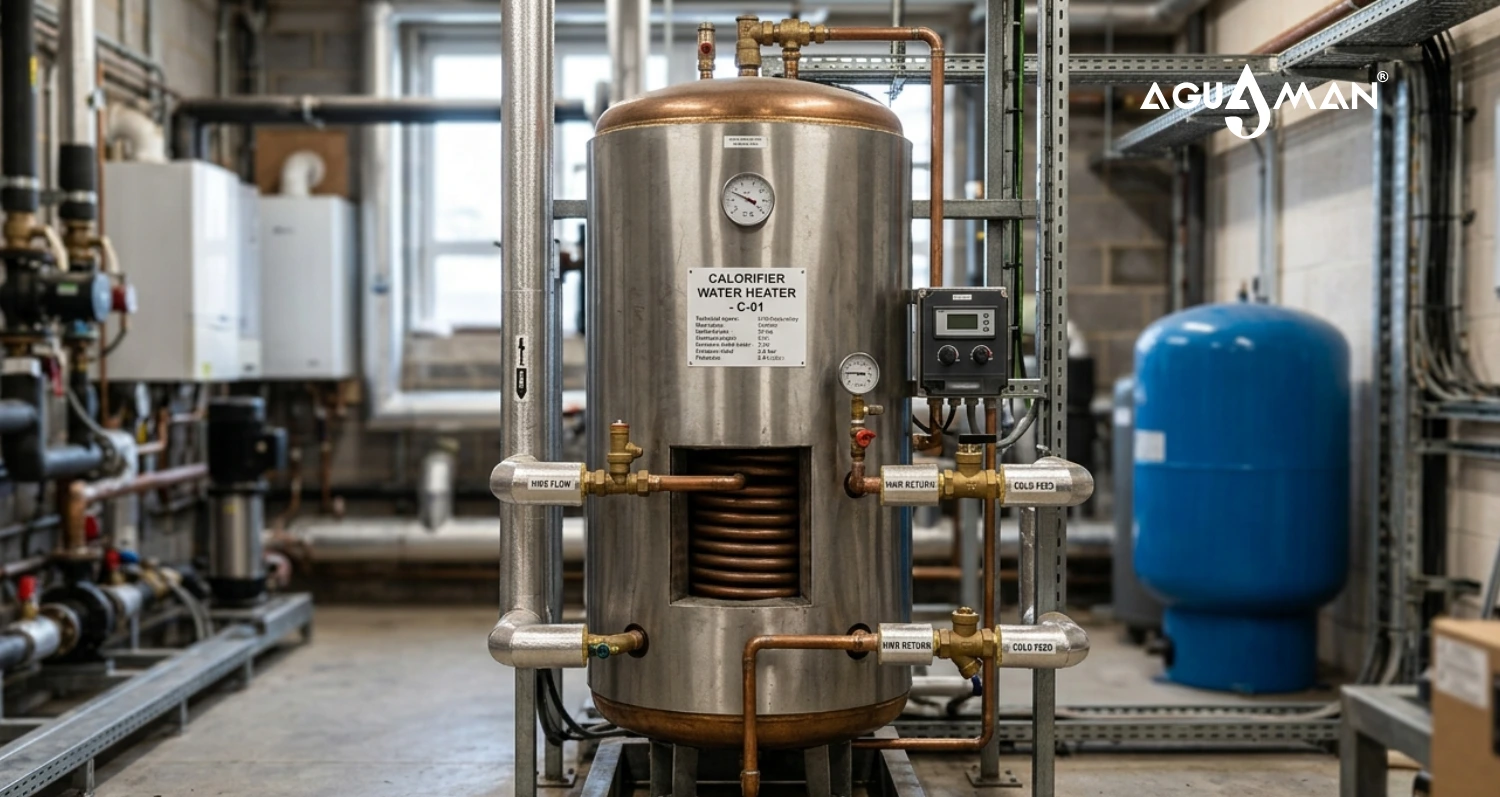
What is a Calorifier?
A calorifier water heater can be used to provide instant hot water whenever required. Hospitals and hotels are two examples where calorifiers can be used.. Steam or hot water provided by boilers is heated to increase the temperature of the water. Water is stored in a storage tank in which the temperature is maintained constantly. This allows users to always get hot water on demand. This means that the supply lasts longer and less energy is consumed. Calorifier becomes a choice due to its durability and energy efficiency.
What Does a Calorifier Do?
A calorifier is a tank that stores and heats water through the transfer of energy from another source of heat. Its main function is simply to make hot water available whenever it is needed.
Functions of a calorifier:
· Efficient water heating: It takes heat from another source (connected to a boiler, solar collector, heat pump etc) and transfers it to the water being stored
· Storage of hot water: Calorifiers insulated tank allows hot water to be stored ready for use rather than heating it upon demand
· Longer heat retention: Good insulation reduces heat loss and can keep water at a set temperature for longer
· High-demand usage: Ideal for buildings which need a high volume of hot water on demand. Hotels, healthcare, commercial buildings and residential blocks.
To put it simply; a calorifier is essentially a large-sized hot water store that heats and provides hot water when needed.
How Does a Calorifier Works?
Essentially a calorifier uses what’s known as indirect heating. Heat is transferred from an outside source into water stored in the calorifier tank. Calorifiers do not generate heat themselves they simply use another source of heating to heat water.
Below are 4 stages that describe how a calorifier works:
Stage 1: Cold Water Enters Calorifier Tank. Cold water from the mains supply enters the calorifier tank. Calorifier tanks are insulated to store a large amount of water and minimise heat loss.
Stage 2: Heating takes place
The calorifier is connected to another source of heat, this can be a boiler, solar heating system, heat pump or electric heating element. The heat from this source heats up a fluid which is pumped through a heat exchanger coil that’s inside the calorifier tank. The heat exchanger will heat the stored water by transferring heat from the heat source to the water by way of the heat exchanger coil. Neither of these systems mix.
Stage 3: Hot water stored
After the water has been heated, it stays stored in the tank which, as mentioned before, is well insulated. The water will stay hot enabling you to cover periods of high hot water demand.
Stage 4: Hot water drawn off when required
When a tap, shower or otherwise is opened, hot water is then drawn off from the calorifier to your desired location. Multiple people can take advantage of hot water at the same time with limited loss of temperature.
What is Calorifier For Hot Water?
Typically, a calorifier tank for hot water is used where there needs to be uninterrupted and constant use of hot water. This is mostly used for larger properties that don’t get enough water output from regular water heaters.
Applications for hot water calorifiers include:
Hotels & Hospitality Use
Hotels need a constant supply of hot water for rooms, kitchen areas and cleaning. They need systems that can keep up when demand is high. A calorifier helps supply larger amounts of hot water when needed.
Hospitals & Healthcare
Hospitals require reliable systems for use in patient care, sanitation and day to day functions. Calorifiers can allow for consistent access to hot water.
Domestic Heating
Domestic heating systems are typically used in large apartment blocks and housing facilities to deliver hot water to multiple residents.
Factories, Commercial and Industrial Use
Factories, offices, and commercial buildings may need access to high volumes of hot water. Calorifiers can be used for this.
Why do so many buildings choose a calorifier water heating system?
The reason is quite simple because it has been proven to work effectively on a larger scale. In a calorifier-based water heater it is the case that the water isn’t directly heated through electric currents or flame. On the contrary, a heat exchanger placed in the storage tank heats the water indirectly.
Here are the core benefits at a glance:
How does the calorifier water temperature affect performance?
Getting the right calorifier water temperature is crucial. Most systems are set to store water at around 60°C to 65°C. This is important for two reasons:
- It eliminates harmful bacteria such as Legionella and keeps your water safe to drink. It keeps the water hot enough so it doesn't lose too much heat by the time it reaches the tap.
- Being too cold (below 50degC) can lead to a bacterial risk. Being too energetic is inefficient and could cause burning. The sweet spot is around 60°C for storage and 50°C at the point of use.
Pro tip:
Always check your calorifier’s thermostat settings during routine maintenance. A poorly calibrated thermostat is one of the most common causes of energy wastage and inconsistent hot water supply.
Is a hot water calorifier heater right for your building?
A hot water calorifier heater is ideal if your building has high or unpredictable hot water demand. Think hotels, hospitals, schools, gyms, apartment blocks, or factories. This is when it makes the most sense to pick one of these:
- You need hot water accessible 24/7 with no interruptions.
- Your facility has a central boiler or district heating system already in place.
- You want to reduce energy bills by storing off-peak heat and using it later.
- You are integrating solar thermal or heat pump technology into your setup.
- For smaller homes or individual apartments, an instant water heater might be enough. When your need increases it is a good idea to use a calorifier as the more efficient, cost-effective option.
Where can you find reliable calorifier suppliers in the UAE?
If you are based in the Gulf region, finding trusted calorifier suppliers in UAE is important, especially because the climate demands robust, high-temperature systems that can handle extreme heat conditions. Look for suppliers who offer stainless steel vessels, customisable capacities, and full after-sales support. A good supplier will also help you size the system correctly based on your peak demand hours and building type.
Conclusion
If you’re planning to upgrade your current system, or contemplating the possibility of a new installation, a calorifier water heater can be an effective, reliable and long-lasting solution that is suitable for any size of building. The most important factor is choosing the correct capacity, ensuring the right temperature, and collaborating with a reliable supplier that understands your requirements.
FAQs
What is the difference between a water heater and a calorifier?
A standard water heater heats water directly by utilizing the electric component or gas burner within the unit. The calorifier warms water indirectly. It utilizes the heat exchanger coil in a tank for storage, which is powered by a different heating source, such as steam line, boiler and solar panels. Calorifiers are better suited to large-scale usage in areas where safety, efficiency and huge volumes are essential.
How does a calorifier work?
A stream of steam or hot water is delivered by the boiler into the heat exchanger inside the tank of calorifier. It transfers heat from hot or steaming water into cold calorifier water without them coming into contact. As soon as the water gets heated to the desired temperature, it can be used in the building. A thermostat controls the process and maintains the set temperature automatically.
What is also known as a calorifier?
A calorifier is sometimes called a hot water storage vessel, indirect water heater, or heat exchanger tank. In some areas, specifically those in UK or those in Middle East, you will often hear it referred to as thermal storage cylinder, or an indirect cylinder. These names all refer to the same fundamental idea of storing and providing hot water by indirect heating.
How to check calorifier temperature?
The ability to check temperature in the majority of calorifiers is easy since nearly every one has a thermometer, or a thermostat reading gauge that is located. externally. To measure the temperature, find the thermometer or gauge, observe its readings, and compare them with your desired point, which is usually 60 Degrees Celsius. For precise measurements, you can use a probe thermometer for the water that comes out of the tank.